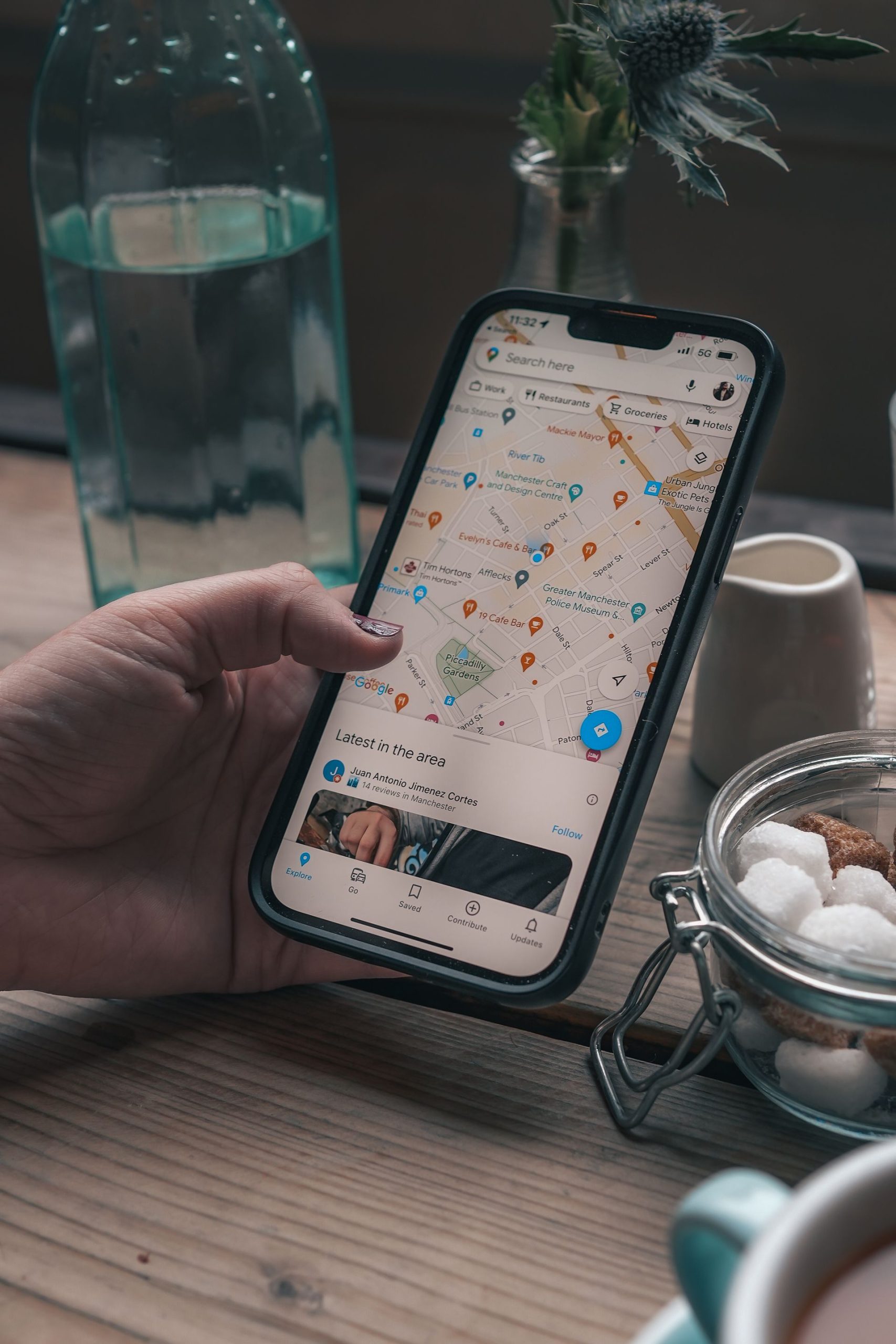
products, services, or companies in a specific geographic area.For a business serving Louisville, Kentucky, that may mean appearing when
someone searches for a nearby plumber, attorney, restaurant, dentist, contractor,
retailer, medical practice, or professional service.
But local SEO is not simply the process of adding the word
Louisville to every page.
Local search visibility comes from a combination of business information,
website relevance, Google Business Profile, reviews, local content, technical
SEO, links, and the actual location and service area of the business.
Understanding how those pieces work together makes local SEO much easier to
approach.
What Is Local SEO?
Local SEO is the process of improving a business’s visibility for searches with
local or geographic intent.
These searches may contain an explicit location.
For example:
- Louisville electrician
- Louisville family lawyer
- HVAC repair Louisville KY
- dentist in Louisville
Other searches may not contain a city name at all.
- coffee shop near me
- emergency plumber
- roof repair nearby
- best auto repair shop
Search systems can use geographic context to determine that these searches have
local intent.
That is why local SEO requires more than keyword placement.
How Local SEO Differs From Traditional SEO
Traditional SEO and local SEO share many of the same foundations.
Both may involve:
- Search intent
- Content relevance
- Internal links
- Technical SEO
- Backlinks
- Website usability
Local SEO adds another layer: geographic relevance.
| Traditional SEO | Local SEO |
|---|---|
| Topic relevance | Topic relevance plus geographic relevance |
| Organic rankings | Organic rankings plus local and map visibility |
| Website content | Website content plus service-area information |
| Backlinks | Backlinks plus local mentions and citations |
| General audience | Audience within a defined geographic market |
Why Local SEO Matters for Louisville Businesses
Many local businesses depend on customers who live, work, or travel within a
limited geographic area.
A Louisville roofing company may have little reason to attract someone looking
for roofing services hundreds of miles away.
The relevant audience is much narrower.
Local SEO helps align search visibility with that real service area.
For many businesses, the goal is not simply:
Get more website traffic.
A more useful goal is:
Help the right local customers discover the business when they are actively
looking for the service it provides.

The Main Parts of Louisville Local SEO
A practical local SEO strategy can be divided into several connected areas.
- Google Business Profile
- Accurate business information
- Local keyword research
- Service pages
- Location and service-area pages
- Reviews and reputation
- Local citations
- Relevant links and mentions
- Technical SEO
- Performance measurement
Improving only one area may help, but stronger local search visibility usually
comes from several areas supporting one another.
1. Google Business Profile
Google Business Profile is one of the most visible digital assets for many
local businesses.
It can help users understand:
- What the business does
- Where it is located
- Which areas it serves
- When it is open
- How to contact it
- What customers think about it
Important profile information can include:
- Business name
- Primary category
- Additional categories
- Address
- Service area
- Phone number
- Website
- Hours
- Services
- Photos
- Reviews
This information should represent the real business accurately.
The
Google Business Profile Guide
covers this area in more detail.
2. Accurate Business Information
Local search depends heavily on understanding which real business is being
represented.
Core information should therefore remain accurate across important online
properties.
This commonly includes:
- Name
- Address
- Phone number
- Website
- Opening hours
These details are sometimes grouped under the acronym
NAP: Name, Address, and Phone number.
Small formatting differences are not necessarily a major problem.
The more important issue is genuinely conflicting information.
For example, an old address or disconnected phone number can confuse both
customers and online platforms.
3. Local Keyword Research
Local keyword research begins by identifying what potential customers actually
search for.
A Louisville attorney, for example, might encounter searches such as:
- Louisville personal injury attorney
- car accident lawyer Louisville
- personal injury lawyer near me
- Louisville injury law firm
These phrases may describe similar services while reflecting slightly different
language and intent.
Do Not Build One Page for Every Keyword Variation
A common mistake is creating a separate page for every slight variation.
For example:
- Louisville plumber
- plumber Louisville
- plumbing Louisville
- Louisville plumbing company
If these searches represent essentially the same customer need, one strong page
may be more useful than four near-identical pages.
Organize content by service and intent, not simply by keyword
variation.
4. Understand Local Search Intent
The same industry can generate very different types of searches.
| Query | Likely Intent |
|---|---|
| what causes a leaking pipe | Informational |
| Louisville plumbing repair | Local service |
| best plumbers in Louisville | Commercial comparison |
| 24 hour plumber near me | Urgent local service |
Each search may require a different type of page.
An educational blog article makes sense for an informational query.
A clear service page makes more sense for someone actively looking to hire a
local business.
5. Build Strong Core Service Pages
A local business website should explain its important services clearly.
Suppose a Louisville HVAC company offers:
- Air conditioning repair
- Heating repair
- HVAC installation
- Maintenance
- Emergency service
If these services represent distinct customer needs, dedicated pages can make
sense.
A useful service page should explain:
- What the service is
- Who needs it
- Common problems
- What the business provides
- Where the service is available
- How to make contact
The objective is not to create the longest possible page.
The objective is to answer the questions a potential customer is likely to have.
6. Make Louisville Relevance Clear
A business serving Louisville should make that geographic relationship easy to
understand.
This can happen naturally through:
- Homepage messaging
- Service pages
- Contact information
- Service-area descriptions
- Location pages
- Google Business Profile
- Local reviews
- Local links and mentions
You do not need to repeat the word Louisville in every sentence.
Geographic relevance should come from the actual business and its relationship
with the market.
7. Use Location Pages Only When They Have a Real Purpose
Businesses serving multiple communities may benefit from location or
service-area pages.
But these pages should provide something useful.
Weak Location Strategy
Create twenty pages with identical text and change only the city name.
Stronger Location Strategy
Create pages where there is enough genuine information to help customers in
that area.
A useful page might explain:
- Services available in the area
- How the business serves that community
- Real service limitations or boundaries
- Relevant local considerations
- Frequently asked questions
Location pages should reflect real service areas rather than invented offices.
8. Optimize the Homepage Around the Business, Not One Keyword
The homepage is often one of the strongest pages on a local business website.
It should communicate the overall identity of the company.
A visitor should quickly understand:
- What the business does
- Where it operates
- What its primary services are
- How to contact it
Do not sacrifice clarity simply to repeat one target keyword.
9. Reviews Are Part of Local Search and Customer Trust
Reviews can influence whether a potential customer chooses one business over
another.
Users may look at:
- Average rating
- Number of reviews
- Recent reviews
- Common customer comments
- Business responses
A healthy review strategy focuses on genuine customer experiences.
Businesses can make it easy for real customers to leave feedback without
fabricating reviews or misleading users.
10. Review Recency Matters to Customers
A profile with many reviews from several years ago may tell a different story
from one receiving ongoing feedback.
Recent reviews help potential customers understand the current experience.
This does not mean a business needs new reviews every day.
The goal is a natural, ongoing pattern that reflects real customer activity.
11. Respond to Reviews Professionally
Review responses are visible to future customers.
Positive responses can be simple and appreciative.
Negative feedback should generally be handled calmly.
A useful response may:
- Acknowledge the concern
- Avoid public arguments
- Offer an appropriate next step
- Move private details offline
The response communicates something about the business to every future reader.
12. Local Citations
A citation is an online reference to a local business.
Citations can appear on:
- Business directories
- Industry directories
- Local organizations
- Professional associations
- Community websites
The goal should not be to create the largest possible number of listings.
Prioritize legitimate and relevant sources.
13. Local Links and Mentions
Links help connect websites across the web.
For a Louisville business, relevant links may come from:
- Local publications
- Community organizations
- Business groups
- Industry associations
- Suppliers
- Partners
- Local events
A useful local backlink does not necessarily need the highest possible
third-party authority score.
Context and relevance matter.

14. Local Backlinks Should Make Sense
Consider two backlink examples.
Example A
A Louisville community organization links to a business that participated in a
local event.
Example B
An unrelated overseas page with no connection to the business contains a random
commercial link.
The first relationship is much easier to understand.
When evaluating local links, ask:
- Is the source relevant?
- Is there a genuine relationship?
- Does the link help readers?
- Could it send actual visitors?
15. Technical SEO Still Matters
Local SEO is not only about Google Maps or reviews.
The website still needs to function correctly.
Technical areas worth reviewing include:
- Crawling
- Indexing
- HTTPS
- Mobile usability
- Page speed
- Canonical URLs
- Redirects
- XML sitemaps
- Internal links
A strong local service page cannot perform effectively if search engines cannot
access or index it.
16. Mobile Experience Is Especially Important
Local searches frequently happen on phones.
Someone may be searching while traveling, comparing nearby businesses, or trying
to solve an immediate problem.
Check whether mobile users can easily:
- Read the page
- Navigate the website
- Call the business
- Submit a form
- Get directions
- View services
Local search visibility loses value when the website creates unnecessary
friction after the click.
17. Make Calls to Action Easy to Find
Different businesses need different customer actions.
Examples include:
- Call now
- Request a quote
- Book an appointment
- Make a reservation
- Get directions
- Schedule service
Important pages should make the appropriate next step obvious.
18. Internal Linking Helps Organize Local Content
Internal links can connect related services, locations, and educational
resources.
For example:
Homepage → Plumbing Services → Water Heater Repair → Louisville Service Area
Or:
Roof Repair Guide → Roof Repair Service → Contact Page
The exact structure depends on the business.
The important principle is that useful pages should not exist in isolation.
19. Local Content Should Answer Real Questions
A local blog can support search visibility when the content reflects actual
customer needs.
Potential topics might include:
- Common service questions
- Seasonal maintenance
- Local regulations relevant to the industry
- Area-specific problems
- Customer education
- Service comparisons
Publishing content simply because a keyword contains Louisville is not enough.
20. Avoid Thin City Pages
One of the easiest ways to create weak local content is to publish dozens of
near-identical pages.
For example:
- Roof Repair Louisville
- Roof Repair Jeffersontown
- Roof Repair St. Matthews
- Roof Repair Shively
These pages may be valid if the business genuinely serves those areas and each
page provides meaningful local information.
But replacing one city name in the same template is not a strong content
strategy.
21. Structured Data Can Add Context
Structured data can help machines understand information represented on a
webpage.
Where appropriate, local business or organization markup may describe
information such as:
- Business identity
- Address
- Contact information
- Business type
The structured data should match the real information presented on the page.
It is not a substitute for accurate business information or useful content.
22. Measure More Than Rankings
Rankings can be useful, but they are not the final business outcome.
Local SEO measurement may include:
- Organic clicks
- Search impressions
- Website leads
- Phone calls
- Bookings
- Quote requests
- Direction requests
- Revenue where measurable
The most important measurement depends on what the business actually wants
customers to do.
23. Local Rankings Can Change by Location
Local search results are influenced by geography.
A person searching from one part of Louisville may not see exactly the same
local results as someone searching from another area.
This means a single manual ranking check is not the complete picture.
Use ranking data alongside:
- Impressions
- Clicks
- Conversions
- Local visibility data
- Actual customer activity
24. Understand the Competition in Search
Offline competitors and search competitors are not always identical.
A company may consider one business its main real-world competitor while
another website consistently appears above it for important searches.
Search competitor analysis can look at:
- Which businesses appear for important queries
- Which service pages they use
- Review patterns
- Website structure
- Local content
- Relevant links and mentions
The purpose is to understand the market, not copy every competitor.
25. Louisville SEO Should Reflect the Real Business
A sustainable local strategy starts with reality.
The real business name.
The real location.
The real service area.
The real services.
The real customer experience.
Search optimization should make those things easier to discover and understand.
It should not require inventing offices, customers, or business information that
does not exist.
A Simple Louisville Local SEO Workflow
A business starting from scratch can use the following sequence.
- Confirm accurate business information.
- Review or establish the Google Business Profile.
- Make the website’s services and service area clear.
- Create strong pages for important services.
- Review local keywords and search intent.
- Improve internal linking and site structure.
- Check crawling and indexing.
- Build a genuine review process.
- Correct important citation errors.
- Develop relevant local links and relationships.
- Measure traffic and customer outcomes.
Common Local SEO Mistakes
| Mistake | Better Approach |
|---|---|
| Repeating Louisville everywhere | Build genuine geographic relevance |
| Creating fake locations | Use real locations and service areas |
| Publishing duplicate city pages | Create distinct, useful location content |
| Focusing only on rankings | Measure leads and customer actions |
| Ignoring reviews | Develop an ongoing genuine review process |
| Chasing every directory | Prioritize relevant and legitimate citations |
| Ignoring technical SEO | Make important pages crawlable and indexable |
How Long Does Local SEO Take?
There is no universal timeline.
Results can vary according to:
- Competition
- Website condition
- Business location
- Industry
- Existing search visibility
- Reviews
- Content quality
- Links
- Technical issues
Some improvements, such as correcting inaccurate hours or broken contact
information, can improve customer experience immediately.
Search visibility changes may take longer and should not be treated as
guaranteed on a fixed schedule.
Should Every Louisville Business Invest in the Same SEO Strategy?
No.
A restaurant, attorney, dentist, contractor, retailer, and B2B company serve
different audiences.
Their local search strategies should reflect those differences.
A restaurant may depend heavily on maps, reviews, menu information, and opening
hours.
A law firm may require detailed practice-area pages and informational content.
A contractor may depend more heavily on service-area pages, project examples,
reviews, and phone calls.
Local SEO should follow the actual customer journey.
What Should a Louisville Business Fix First?
Start with the issues that affect customers and search access most directly.
- Incorrect business information
- Broken phone numbers or contact forms
- Serious crawling or indexing problems
- Missing or weak core service pages
- Incomplete business profile information
- Poor mobile usability
- Review and reputation issues
- Citation inconsistencies
- Local content and link opportunities
There is little value in perfecting minor metadata while an important service
page is inaccessible or the published phone number is wrong.
Local SEO Is a System, Not One Ranking Trick
There is no single action that defines Louisville SEO.
Local visibility comes from a collection of signals and experiences that work
together.
A useful website explains the business.
Accurate profiles reinforce its identity.
Reviews provide customer context.
Local citations and links connect the business with the broader community and
web.
Technical SEO makes the content accessible.
Analytics show whether the strategy produces useful outcomes.
For businesses serving Louisville, the objective is not simply to convince a
search engine that the word Louisville belongs on the website.
The objective is to make the relationship between the business, its services,
its customers, and its actual market clear.
For a broader step-by-step review, use the
Local SEO Checklist.
You can also read the
Louisville SEO Guide
for a complete overview of the site’s core local search framework.